

By Emily Mitchell
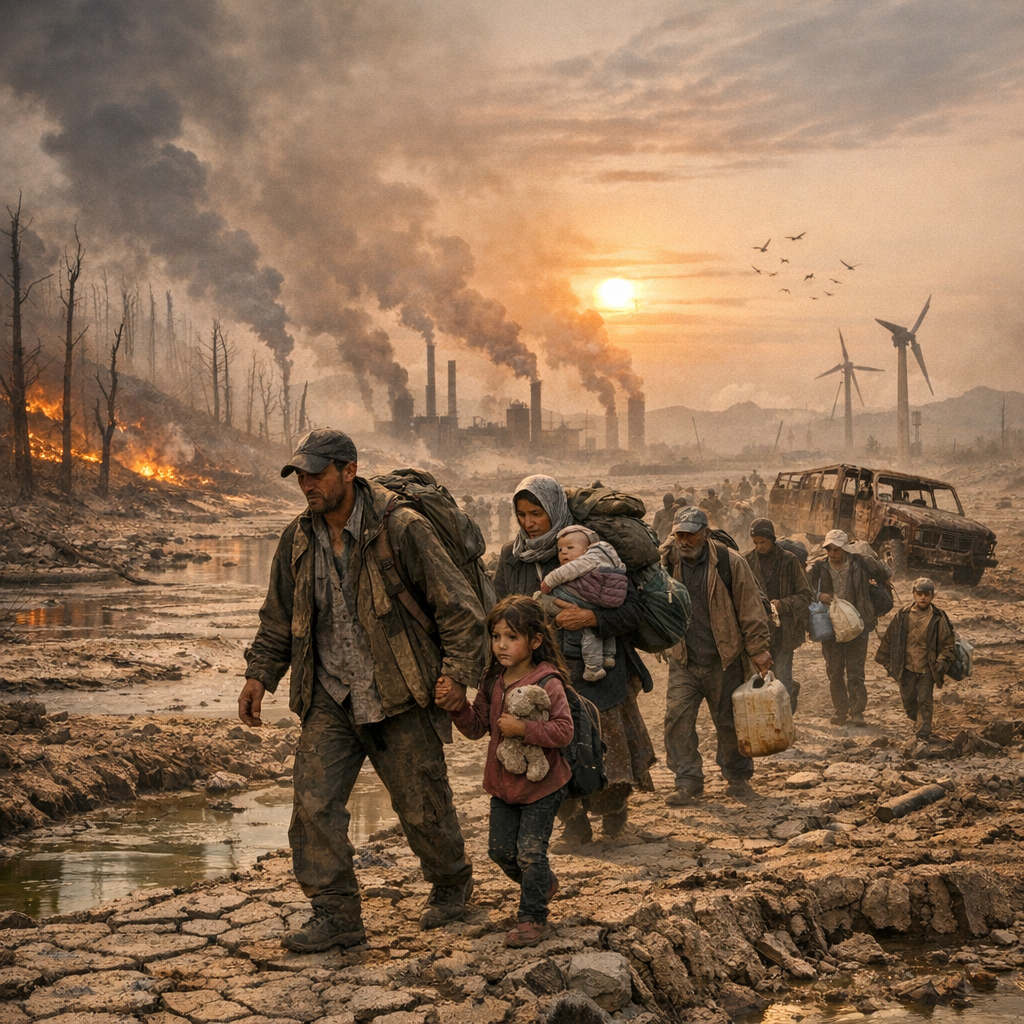
The changing climate is no longer just a weather pattern—it has become a major force driving human movement. From sudden storms to gradual shifts like droughts and sea level rise, more people around the world are finding that staying put just isn’t an option.
Current Trends in Climate-Related Migration
Recent global data reveals over 40 million people were refugees by the end of 2025, with almost 70 million displaced within their own countries due to war, violence or environmental pressures. Many of these movements are intertwined with climate stressors—especially for populations in conflict zones or fragile settings. Global trends show forced displacement fluctuating but not declining, even as some return home under difficult conditions.
“Climate mobility” isn’t limited to sudden disasters. Slow-onset changes like rising temperatures, dwindling water supply, worsening drought, or rising seas are forcing people to migrate—either internally or across borders. A recent model estimates that under moderate climate scenarios, nearly 200 million people could be relocated because of hazards by the middle of this century.
Why This Happens: Climate, Demography, and Disparity
Many migration projections show population growth plays a massive role—more people in vulnerable zones means more exposure to climate hazards. Demographic shifts, such as youth bulges in low-income countries or urbanization, compound climate stress.
But it’s more complex than simply moving away from danger. Institutional factors, economic status, access to early warning systems, land rights, and inequality shape whether people stay, leave, or move across borders. Those with fewer resources are pushed into more precarious situations and have fewer safe options to relocate.
What’s Being Done—and What Needs More Attention
International bodies recognize the urgency. New governance mechanisms and work-programs under the Global Climate Action Agenda aim to turn climate pledges into measurable results—clean energy, resilient infrastructure, and improved adaptation strategies with a focus on the most affected communities.
Legal recognition of just transition—ensuring that people and economies aren’t left behind as countries shift away from fossil fuels and toward low-carbon futures—is also gaining ground. Laws and policies in several countries now reflect obligations to protect vulnerable populations during climate-driven change.
Implications for Kansas City and Beyond
While Kansas City is far from the places most immediately impacted by climate migration, we will feel ripple effects. Cities across the U.S. may see changes in immigration patterns, increased demand for services, or shifts in trade and supply chains as climate stress in other regions increases. Understanding climate mobility helps local planning departments, nonprofits, schools and public health systems prepare.
We must also think globally. Supporting climate adaptation abroad—funding early warning, sustainable agriculture, resilient infrastructure—benefits everyone. It’s not just an act of solidarity; it is arguably an act of foresight.
Looking Ahead
Policy makers need to shift from reacting to crises toward embedding long-term adaptation into all levels of governance. That means better data collection, more community-led solutions, and fairer legal frameworks for people moving because of climate change. It means treating people displaced not as statistics, but as neighbors who deserve dignity, support, and agency.
Climate mobility isn’t just about numbers—it’s about real people making difficult decisions. As global warming accelerates, the question will be whether governments and communities rise to the challenge, both near and far.